
What is acupuncture?
Acupuncture is an ancient form of medicine developed in the East over 2500 years ago. This holistic form of medicine is now becoming more popular in the West and is commonly used as a complementary therapy alongside orthodox medicine.
How does it work?
Exactly how acupuncture produces its effects is not yet fully understood. Research suggests that acupuncture may interact with the nervous system and the body’s natural pain-regulating processes.
Some research has suggested that acupuncture may:
- influence the way the nervous system processes pain
- stimulate the release of naturally occurring substances involved in pain regulation
- influence activity within the brain and nervous system
- promote a sense of relaxation and wellbeing
Research into the mechanisms of acupuncture is continuing, and there is still much to learn about how it works.
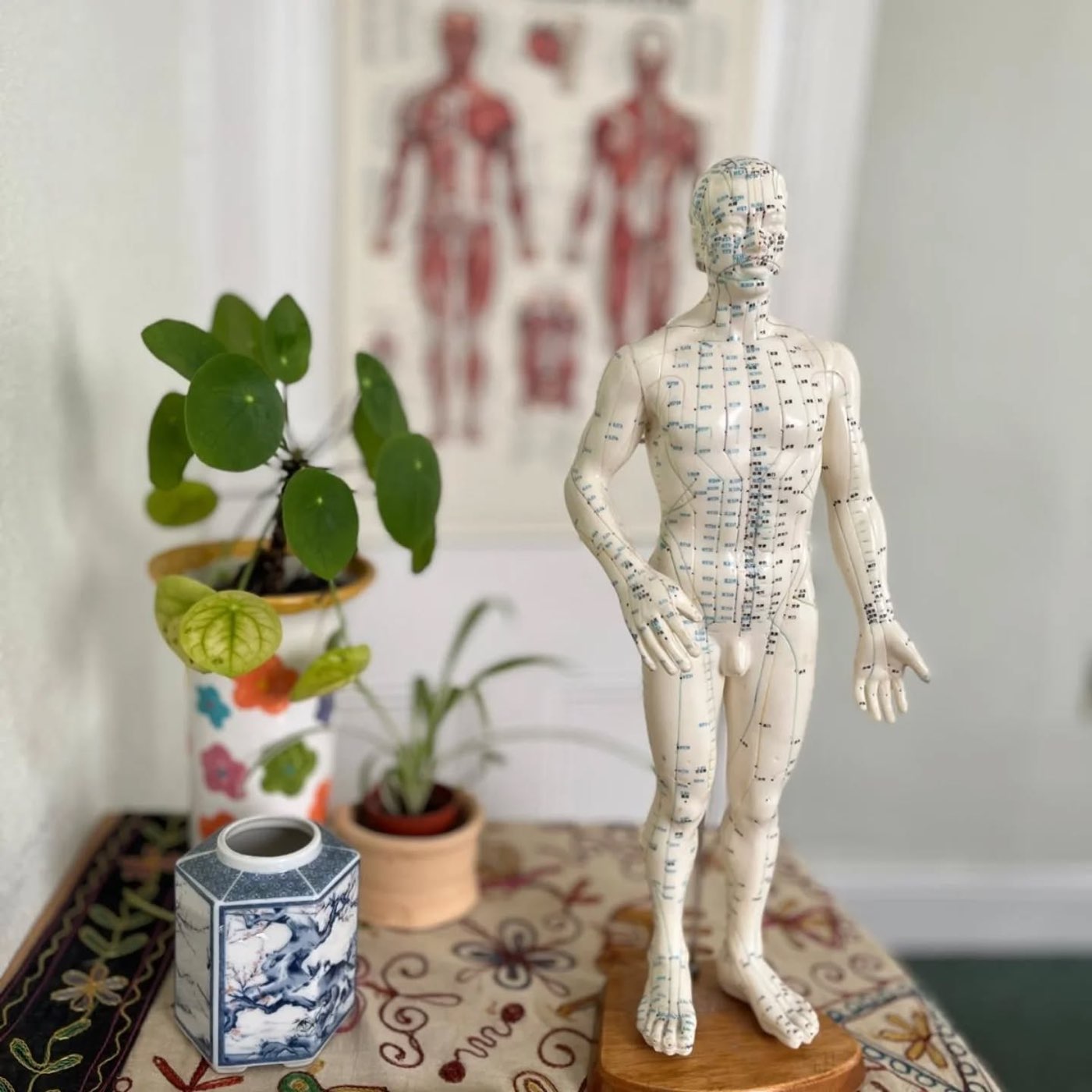
Chinese medicine believes that energy or qi flows through a system of channels in the body called meridians. Within traditional Chinese medicine theory, qi may become blocked, excessive or deficient, and acupuncture aims to unblock and rebalance this energy.
You can read more about the modern research into acupuncture on the British Acupuncture Council website.
Read about acupuncture research on the British Acupuncture Council website (opens in a new tab)
Reasons people come to us
People come to acupuncture for many different reasons. Find out more about some of the things people most often ask Clare and Tim about.
What happens during treatment?
Treatment involves inserting very fine needles at specific points on the body. The needles are sterile and single use.
The needles used for acupuncture are much finer than those used for injections or blood tests, and are usually painless.
Your first appointment also includes a detailed consultation so that we can decide how to approach your treatment.
Find out what happens at your first appointment
Treatment may also include massage, heat, moxibustion, electroacupuncture and cupping.